


Blog
Wholesale Bullet Vibrators: Build a Range from Basic to Premium SKUs

Buyers should build a balanced wholesale bullet vibrator range around three clear tiers: accessible battery-powered basics, practical rechargeable core products, and selected premium silicone or feature-led designs. Every SKU needs a distinct role, price position, and customer benefit. Stocking too many similar models can create inventory pressure, price overlap, and unnecessary customer confusion.
On this page 12 sections
At WMCustomDolls, we approach this as a product-range planning decision rather than a product-definition question. Retailers needing basic information about the format can read our bullet vibrator guide. Here, we focus on wholesale selection, mixed orders, packaging, SKU roles, and private label preparation.
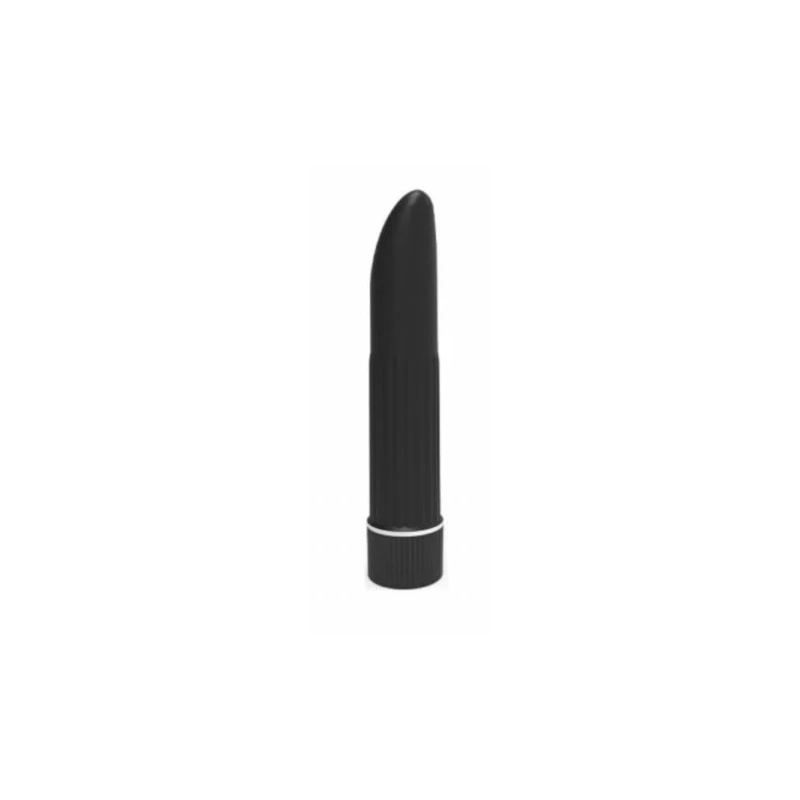
A strong assortment is not necessarily the largest assortment. It is one in which customers can understand why each model exists and why its price differs from the alternatives.
Why Do Bullet Vibrators Work in Mixed Adult Toy Orders?
Bullet vibrators often fit mixed wholesale orders because they are compact, available at several price points, and relatively easy to position within a wider retail assortment. They can provide an accessible starting category for new stores and a useful range extension for established distributors.
Compact packaging may help retailers use shelf and warehouse space efficiently. It can also make it practical to test several differentiated products without building an entire order around one model. The exact carton dimensions and shipping impact should still be confirmed for each SKU.
For a new retailer, a mixed order might include:
- One simple battery-powered mini model
- Two rechargeable core products at different prices
- One verified silicone-exterior upgrade
- One discreet or lipstick-style design
- One remote-control model for feature-led positioning
This structure gives the buyer several price and feature levels without ordering many near-identical products. It can also help identify which role attracts demand before deeper repeat orders are placed.
Mixed selection does not remove MOQ considerations. Minimum quantities may differ by SKU, color, standard packaging, logo method, or custom box. Buyers interested in mini bullet vibrators wholesale should ask whether the supplier can combine models or categories within the total order and whether each SKU has its own minimum.
Bullet vibrators should also be planned as part of a wider adult toy wholesale range. This helps purchasing teams compare the category’s price, packaging, and inventory role with other product groups rather than treating it in isolation.
What Is the Common Approach to Building a Bullet Vibrator Range?
Many buyers begin by comparing supplier prices, selecting several designs, requesting silicone or rechargeable options, and asking about MOQ and packaging. These checks are useful, but they do not show whether every selected SKU has a clear commercial role.
Common sourcing advice usually tells retailers to:
- Offer several product styles
- Choose silicone products where available
- Include rechargeable and waterproof models
- Compare prices between suppliers
- Request samples before ordering
- Ask about MOQ and packaging
- Consider private label options
The problem is not that this advice is wrong. It is that it often stops too early.
For example, two rechargeable models may look different but have almost the same retail price, controls, dimensions, packaging, and customer positioning. Stocking both may add inventory without adding a meaningful choice.
Silicone wording also needs more detail. Buyers should confirm whether the complete exterior or only part of the product is silicone-covered. Material presentation is one part of the value tier, but customers may also compare charging, controls, surface finish, supported water protection, packaging, accessories, and instructions.
The same principle applies to premium features. Remote or app-connected products may expand a range, but they can require more product-page information and customer support. Buyers should compare the complete retail proposition, not simply count the number of features.
Why Does Stocking More Models Not Always Create a Better Range?
More models can weaken an assortment when several SKUs serve the same customer, sit at the same price, and offer no obvious reason to choose one over another. A smaller, clearly differentiated selection is often easier to merchandise, explain, reorder, and support.
Before adding a product, retailers should be able to complete this sentence:
We need this SKU because it provides a specific price, design, feature, or packaging option that our current range does not cover.
If that sentence cannot be completed clearly, the product may duplicate an existing role.
Consider a buyer choosing six rechargeable models. If all six use similar controls, have comparable dimensions, and occupy a narrow price band, the assortment may appear broad in a spreadsheet but repetitive on a category page. Customers may struggle to compare them, while purchasing teams must monitor six inventory lines.
Each SKU should have at least one visible and supportable distinction, such as:
- A lower opening price
- A different power format
- A verified material or finish upgrade
- Clearly documented water protection
- A more discreet external design
- A remote or app-based control system
- Better gift or private label packaging
- A useful included accessory
- A distinct target customer or retail channel
Color alone does not always justify another SKU role. It may be better managed as a variant, depending on the store platform, packaging, barcode structure, and replenishment process.
What Hidden Costs Can an Unbalanced Product Range Create?
An unbalanced range can create costs beyond the wholesale unit price. These may include slow inventory, duplicated MOQ commitments, packaging rework, unclear listings, customer-service workload, and returns caused by mismatched specifications or expectations.
The lowest quotation is not always the lowest total business cost. A basic model may be commercially useful, but unclear controls, missing battery information, weak instructions, or inconsistent packaging can create work after the sale.
Common hidden risks include:
| Risk | How it affects the business | Practical response |
|---|---|---|
| Duplicate SKUs | Inventory is divided between similar products | Assign one clear role to every SKU |
| Price overlap | Customers cannot see why one model costs more | Build a visible price and feature ladder |
| Excess MOQ | Capital is spread across too many variants | Start with differentiated mixed orders |
| Unclear specifications | Listings and support replies may conflict | Use an approved specification sheet |
| Packaging inconsistency | The range looks disconnected | Define packaging levels by product tier |
| Incorrect feature claims | Returns and complaints may increase | Match copy to the exact model documentation |
| Private label rework | Artwork and production may be delayed | Approve names, features, manuals, and dielines |
| Photo mismatch | Customers receive a different-looking configuration | Approve production-intent images and samples |
MOQ pressure becomes especially important when each color, package, or logo version has a separate requirement. Five inexpensive models can create a larger commitment than two carefully selected core products.
Buyers should also confirm that product photos represent the quoted SKU. Small differences in buttons, charging contacts, accessories, surface finish, or packaging can affect the accuracy of a retail listing.
How Should Buyers Build Entry-Level, Mid-Tier, and Premium Product Tiers?
A practical range uses entry-level products to establish an accessible price, mid-tier products as the main retail assortment, and premium products to offer clearly supported material, feature, design, or packaging upgrades.
The purpose of a tier is not to declare one product universally better. It is to make the assortment understandable.
| Product Tier | Typical Models | Role in the Range | Main Buyer Check |
|---|---|---|---|
| Entry-Level | Battery or simple mini bullets | Accessible starter price | Cost, controls, packaging clarity |
| Mid-Tier | Rechargeable core models | Main retail assortment | Charging, finish, care information |
| Premium | Silicone, remote, app, or design-led models | Higher-value or gift-focused range | Verified features, packaging, market fit |
Tier 1: Entry-Level Basics
Entry products may use disposable batteries or straightforward controls. Their value comes from an accessible price and easy-to-understand positioning.
Simple should not mean incomplete. The product page and packaging should still identify the power source, dimensions, material description, controls, package contents, and care reference.
Tier 2: Core Mid-Tier Products
Mid-tier rechargeable models can form the center of the range. Buyers might choose a small number of products with visibly different finishes, charging systems, dimensions, or design formats.
These SKUs need clear charging and care instructions because they are likely to carry more product information than basic models.
Tier 3: Premium or Feature-Led Products
Premium products may include verified silicone exteriors, remote control, app connectivity, discreet designs, or stronger presentation packaging. Their higher price should be supported by differences customers can understand.
A premium tier should normally remain selective. One well-documented remote model may be more useful than several connected products requiring similar support.
How Should Buyers Compare Battery, Rechargeable, Silicone, Remote, and Discreet Models?
Buyers should compare models by their role in the assortment, not by feature count alone. Power format, verified material, control method, design, documentation, packaging, and support requirements all influence commercial fit.
Use a model comparison sheet before requesting bulk bullet vibrators:
| Model Type | Possible Range Role | Details to Verify |
|---|---|---|
| Battery-powered | Opening price or simple basic SKU | Battery type, inclusion, controls, battery compartment |
| Rechargeable | Core mid-tier product | Connector, included cable, charge indicators, documented runtime |
| Silicone exterior | Material or finish upgrade | Exact material coverage, seams, finish, care wording |
| Water-protected | Practical feature tier | Supported rating or wording, charging-area instructions |
| Remote-control | Feature-led extension | Pairing, remote power, documented range, instructions |
| App-connected | Premium technology option | App source, compatibility, accounts, updates, support route |
| Lipstick-style | Discreet or gift-focused design | Dimensions, closure, finish, packaging consistency |
Silicone alone does not define the whole quality or value tier. A silicone bullet vibrator wholesale decision should also consider construction, controls, charging, surface finish, package contents, instructions, and presentation.
Waterproof and water-resistant are not interchangeable marketing terms. Buyers should request documentation for the exact model and avoid inferring protection from its appearance.
Remote and app-connected products require more customer education than basic models. Retailers may need to explain pairing, battery or charging requirements, phone compatibility, account setup, and troubleshooting. These products should earn their place through clear market demand and a suitable retail price.
What Product Information and Care Notes Should Retailers Provide?
Retailers should publish consistent, model-specific information covering dimensions, material, power, charging, controls, supported water protection, package contents, and basic care. The website, packaging, supplier specification, and manual should describe the same product.
A useful product information template should include:
- Product and model name
- Internal or supplier SKU
- Total dimensions
- Product weight where relevant
- Verified exterior material
- Power source
- Required battery type
- Charging method and connector
- Included cable or accessories
- Control type
- Supported water-protection wording
- Package contents
- Basic cleaning, drying, storage, and charging notes
- Link or reference to the model-specific manual
Avoid broad phrases such as “USB rechargeable” when the connector and included accessories are unclear. Customers should be able to determine whether the product uses magnetic contacts, a pin-style connector, or another documented method.
Care information should remain concise and specific. Retailers can remind customers to follow the product manual, avoid submersion unless the model documentation permits it, keep unprotected charging areas away from moisture, and dry the item fully before charging or storage.
Product claims must match the exact SKU. Avoid unsupported medical-grade, waterproof, noise-level, safety, compatibility, or performance statements. Consistent information can reduce confusion across product pages, marketplaces, packaging, and customer-service replies.
What Packaging and Private Label Questions Should Buyers Ask?
Before ordering private label bullet vibrators, buyers should clarify the standard package, customization scope, MOQ, artwork process, manual wording, barcode requirements, production timing, and approval steps for the exact model.
Standard wholesale packaging may be the practical choice for an initial market test. Custom packaging can make more sense when the buyer has validated the product role, brand positioning, likely order volume, and retail channel.
Ask suppliers these questions:
- What standard packaging is supplied with this SKU?
- Can a logo be added to the product, package, or both?
- Is a sticker, sleeve, insert, or fully printed color box available?
- Does each customization method have a different MOQ?
- Who supplies the packaging dieline?
- Which product claims can be supported by current documentation?
- Can the manual or instruction card be customized?
- What languages are available?
- Who creates and verifies the barcode?
- How are model names, colors, and version changes recorded?
- What sample and artwork approvals are required?
- What lead-time range applies to the quoted configuration?
Private label delays often begin when packaging is designed before the product specification is finalized. The retail name, SKU, material wording, charging method, package contents, care notes, and supported feature claims should be approved together.
WMCustomDolls coordinates selected OEM and private label support, but available options, MOQ, cost, and timing depend on the model and project requirements.
What Is a Better Decision Framework for Wholesale Bullet Vibrator Buyers?
Evaluate every proposed SKU through five questions: who it serves, what role it plays, why it differs, what it costs to stock, and how much information or support it requires. Reject products that cannot earn a clear place in the range.
Use this range-planning scorecard:
| Decision Area | Question to Ask |
|---|---|
| Target customer | Which budget and retail preference does this SKU serve? |
| Product role | Is it entry-level, core mid-tier, or premium? |
| Price ladder | Is there enough separation from nearby products? |
| Differentiation | What verified feature makes it distinct? |
| MOQ | Can we test it without creating excessive inventory? |
| Packaging | Does presentation match the intended retail price? |
| Product education | How much explanation will customers need? |
| After-sales risk | Which charging, setup, or care questions may arise? |
| Documentation | Do the manual, photos, packaging, and specification agree? |
| Reorder logic | Can this SKU be reordered consistently under the same reference? |
For an initial mixed order, prioritize products with visibly different roles. A basic battery model, a rechargeable core SKU, a silicone-exterior upgrade, and one feature-led design may provide more useful market information than four similar rechargeable products.
Samples should be compared against the intended retail configuration. Buyers can review finish, seams, buttons, charging connection, accessories, package fit, printed information, and consistency with the specification sheet. App or remote models also need setup and support review.
After testing demand, the retailer can deepen orders for core products and remove models that duplicate stronger SKUs.
How Should Buyers Send a Clear Wholesale Inquiry?
A useful wholesale inquiry identifies the target market, expected quantities, preferred price tier, required features, packaging needs, shipping destination, and whether mixed ordering or private labeling is needed. Clear requirements help suppliers return more relevant options.
A buyer inquiry should include:
- Company name and website
- Target country or sales region
- Retail, distribution, marketplace, or private label channel
- Approximate total quantity
- Preferred quantity per SKU
- Entry-level, mid-tier, and premium price targets
- Battery, rechargeable, silicone, remote, app, or discreet-design needs
- Preferred colors
- Standard or custom packaging requirements
- Logo placement needs
- Manual and language requirements
- Barcode or labeling expectations
- Whether a mixed order is required
- Sample requirements
- Shipping destination
- Desired schedule, subject to confirmation
Instead of writing, “Please send your best bullet vibrator prices,” provide a range plan. For example:
We are sourcing four to six bullet vibrator SKUs for an online retail launch in Germany. We need one entry-level battery model, two rechargeable mid-tier models, one verified silicone-exterior model, and one remote option. Please confirm MOQ by SKU, mixed-order feasibility, packaging, manuals, sample costs, and shipping options.
This gives our team enough information to compare appropriate products and identify questions requiring clarification.
Buyers can review the current bullet vibrator product category and then contact us for wholesale sourcing, mixed orders, range planning, packaging coordination, or OEM/private label support. Current products and customization options may vary by model and order details.
FAQ
What types of bullet vibrators should retailers stock?
A balanced range often includes an accessible battery-powered model, several differentiated rechargeable core products, and a limited number of silicone, remote, app-connected, or design-led options. The final mix should reflect the target market, price ladder, and support capacity.
Can bullet vibrators be private labeled?
Selected models may support logos, custom inserts, sleeves, color boxes, manuals, or broader private label packaging. Available options and MOQ depend on the product, customization method, quantity, and production requirements.
What details should buyers send for a quote?
Send the target market, approximate quantity, preferred product tiers, feature requirements, packaging expectations, private label needs, mixed-order request, and shipping destination. A model list or reference images can also help, but final specifications should be confirmed in writing.
Conclusion
A balanced range is stronger than random variety. Match every SKU to a clear tier, verify its specifications, and align packaging, MOQ, product information, and support needs.
Contact WMCustomDolls to discuss wholesale bullet vibrators, mixed orders, product-range planning, or private label preparation.
Planning a Wholesale Order?
Share your product interests, estimated quantity and destination market with our team.
Request Wholesale Information