


Blog
Vibrating Cock Rings for Couples: What Buyers Should Compare Beyond Vibration Modes

Mode counts are easy to promote, but they reveal little about whether a vibrating ring will remain stable, maintain contact, or be easy to control.
On this page 8 sections
A vibrating cock ring should be compared first by fit range, ring tension, motor placement, contact surface, and control access. Power, documented noise information, water protection, and care come next. Extra patterns offer limited practical value if the motor rotates, loses position, or is difficult to switch off.
At WMCustomDolls, we recommend treating “for couples” as a use-case description rather than proof of suitability. Buyers should examine the exact product design and model-specific documentation before comparing promotional features.
Readers looking for definitions, broad product types, materials, and general safety information can visit our cock ring types, materials, and safety guide. This article focuses on the relationship between fit, motor placement, contact stability, and controls.
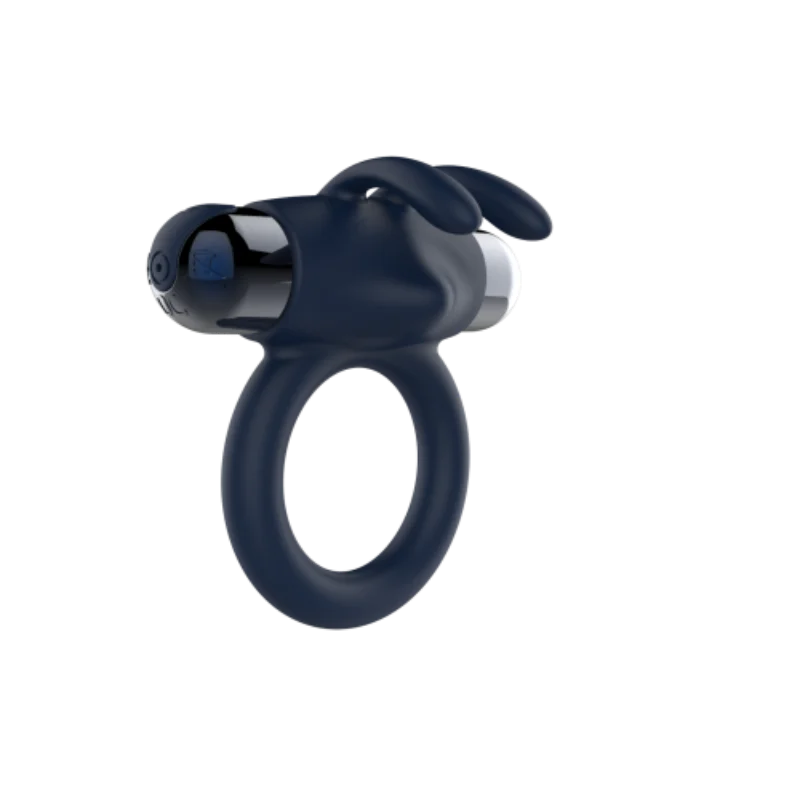
Why Is “More Modes” Not the Same as a Better Shared-Use Product?
More vibration modes do not automatically make a vibrating ring better for shared use. Stable fit, consistent motor contact, accessible controls, and a clear off function usually matter more than the number of patterns listed on the package.
Mode count, motor intensity, motor placement, contact stability, and control accessibility are separate product characteristics. They should not be combined into a single claim about performance.
- Pattern count describes how many steady or changing sequences the product offers.
- Motor intensity describes vibration output, which should only be compared using reliable information for the exact model.
- Motor placement determines where the vibrating module sits in relation to the ring.
- Contact stability describes whether the module remains in its intended position.
- Control accessibility affects how easily a setting can be changed, paused, or switched off.
A model may offer many patterns but require repeated button presses to move through them. If the controls cycle in only one direction, returning to a preferred setting may take several presses. A simpler model with fewer settings and a clear operating sequence may be easier to manage.
Mode count also says nothing about balance. A relatively large or heavy motor module can pull against a flexible ring, especially when the band stretches. If that movement causes rotation or tilting, the intended contact surface may move away from its original position.
Generic advice to choose the “strongest” motor creates a similar problem. Greater intensity cannot correct an unstable ring, poorly positioned module, narrow contact area, or inaccessible button. A stronger motor may also produce different sound and handling characteristics, but buyers should not assume these without model-specific evidence.
A useful comparison starts with the physical design:
- Confirm the stated fit dimensions.
- Review the ring band and expected tension.
- Check the motor’s location and weight relative to the ring.
- Examine the shape and width of the contact surface.
- Identify the button and off function.
- Compare power, documented operating details, and care.
- Consider pattern count only after these points are clear.
This order helps consumers avoid choosing by feature count alone. It also gives retailers a stronger basis for product descriptions and SKU planning.
How Do Motor Position and Contact Surface Change Product Performance?
Motor position affects where vibration is concentrated, how the module is balanced, and whether the contact surface stays aligned. Buyers should compare the module’s location, angle, dimensions, surface shape, and connection to the ring rather than assuming that all vibrating rings work alike.
Motor modules can be positioned directly above the ring, extended forward, or enclosed within a raised contact section. Each arrangement changes the product’s balance and intended contact point.
A centered housing may look stable in a product image, but its angle can change when the ring stretches. An extended module may provide a larger contact area, yet its additional length can create leverage that encourages movement. Neither format is automatically better.
Module Location and Alignment
Buyers should request clear images or diagrams showing:
- The motor’s position in relation to the ring
- The direction of the main contact surface
- The module’s height, width, and length
- Whether the module is fixed or removable
- Where the controls and charging connection are located
- How the module joins the flexible ring
These details make it easier to compare two products that otherwise have similar mode counts and promotional copy.
The exact specification depends on the selected model. Product pages should therefore describe the physical arrangement rather than promise a particular result. For example: Flexible vibrating ring with a forward-positioned motor module and a broad textured contact surface.
This wording tells the buyer what the product is. It does not promise universal comfort, stable contact for every user, or a guaranteed outcome.
Contact Surface
The contact area may be a compact raised point, a wide textured panel, or a flexible extension surrounding the motor. Its usefulness depends on shape, angle, surface finish, and stability.
Retailers should document whether the surface is:
- Narrow or broad
- Smooth or textured
- Flexible, semi-rigid, or supported by a rigid housing
- Integrated with the ring or attached as a separate module
- Positioned directly over the ring or extended away from it
A broad surface does not automatically provide better contact. If the module rotates, even a large panel may lose its intended position. A smaller contact area can also be difficult to align if the ring does not provide enough stability.
Module Weight and Rotation
Module weight deserves attention because the ring must support the motor, battery, housing, controls, and charging components. A rechargeable design may have different balance characteristics from a small battery-powered model, but buyers should verify the exact construction rather than making assumptions based on power type alone.
The module may be more likely to move when:
- It is tall or extended
- Its weight is unevenly distributed
- The supporting ring is narrow
- The band stretches significantly
- The module-to-ring connection is highly flexible
- The contact surface pulls in one direction
These points do not prove a product defect. They show why motor placement should be reviewed together with fit and ring tension.
Why Do Fit Stability and Ring Tension Matter?
Fit stability helps the motor remain aligned, while appropriate ring tension supports positioning without causing excessive pressure. A loose ring may rotate or slide, while a ring that feels painful or causes concerning symptoms should be removed immediately.
“One size” and “stretch fit” are not complete specifications. Flexible construction may support a range of dimensions, but it does not establish universal compatibility.
Retailers should request the following information where available:
- Unstretched internal diameter
- External ring dimensions
- Band width and thickness
- Documented stretch or fit guidance
- Complete product weight
- Motor-module dimensions
- Contact-surface dimensions
- Verified material composition
Fit and individual comfort vary. A documented fit range should come from the supplier specification for the exact SKU, not from a similar model or a generic category assumption.
Ring Tension and Module Support
A ring band has two related jobs: providing the intended constriction and supporting the vibrating module. The motor can become less stable if the ring does not hold it securely.
Rotation may be influenced by:
- Insufficient tension for the individual fit
- An unevenly weighted motor housing
- A narrow or thin ring band
- A tall module
- Movement during use
- Lubricant on the ring surface
- A long contact extension pulling from one side
Retailers should avoid describing a rotating module as a motor failure unless there is evidence of a mechanical defect. The motor may operate correctly while the fit or balance does not suit the intended positioning.
Product pages should not promise a guaranteed fit. Exact dimensions, ring construction, and model-specific fit information give buyers a more useful basis for comparison.
A Brief Safety Note
This article provides general product education, not medical advice. Guidance for constriction rings generally recommends limiting wear to no more than 30 minutes. Remove the product immediately if it causes pain, numbness, coldness, marked swelling, or discoloration.
Seek urgent medical assistance if the ring cannot be removed. People with health conditions or medications that affect circulation or sensation should consult a qualified healthcare professional before use.
Readers can review the FDA guidance for external penile rigidity devices and MedlinePlus guidance on constriction bands for additional background. Always follow the specific product manual.
Which Controls, Power Systems, and Operating Details Matter Most?
Controls should be easy to locate, understand, pause, and switch off while the ring is in its intended position. Buyers should also verify the power system, charging requirements, remote operation, documented runtime, noise information, and water protection for the exact model.
Button and Off-Function Access
A single-button control does not always mean simple operation. Buyers need to know:
- Where the button is positioned
- Whether it is raised or flush
- How the product switches on
- How settings are changed
- Whether settings cycle in one direction
- Whether a long press switches the motor off
- Whether a separate pause function is available
- Whether the button remains accessible when the module is positioned
A button on the rear or underside of the housing may be less convenient to find by touch. Product images should show its location clearly.
The off function is particularly important. Either partner should be able to understand how to stop the product without moving through every available mode. Retail copy should not call controls “easy” unless the operating steps support that description.
Remote-Control Requirements
A remote can make shared control more convenient, but it introduces extra specifications and support needs. Retailers should clarify:
- Whether the remote is included
- How it pairs with the ring
- Whether pairing must be repeated
- How the remote is powered
- Whether batteries are included
- Whether the ring and remote charge separately
- How the product switches off without the remote
- The supported control range, but only when documented
Remote range should not be estimated from an informal check or copied from another model. The published claim should match the supplier specification and manual for the exact SKU.
App-controlled products require further details, including device compatibility, connection method, account requirements, permissions, and available support. These features may suit a premium range, but they can also increase customer-service questions.
Power, Runtime, Noise, and Water Protection
Battery-powered models should identify the required battery type, quantity, and inclusion status. Rechargeable models should list the charging method, included cable, charge indicator, and model-specific charging instructions.
Runtime should only be published when verified for the selected model. Retailers should not invent a duration or apply one model’s figure to another product.
Noise claims require similar care. “Completely silent” is not appropriate without specific evidence. Perceived sound can change with the selected mode, surroundings, motor position, and contact with other surfaces. Where verified information exists, the stated conditions should accompany the claim.
A smooth exterior does not confirm water protection. Seams, buttons, battery compartments, removable motors, and charging contacts all affect permitted care. Retailers should publish only the exact documented wording or rating and direct customers to the product manual.
What Should Product Pages Document Before Calling a Ring “For Couples”?
A couples-focused page should identify the features that support shared use. It should document fit, motor placement, contact shape, controls, power, materials, care, and package contents instead of using “for couples” as a substitute for specifications.
| Review Area | Why It Matters | What the Product Page Should State |
|---|---|---|
| Ring fit | Affects comfort and module stability | Internal diameter, band dimensions, and documented fit guidance |
| Motor location | Influences the intended contact point | Module position, orientation, and dimensions |
| Contact surface | Affects contact consistency | Shape, width, texture, and flexibility |
| Control access | Determines how settings are changed or stopped | Button location, operating sequence, and off method |
| Power | Affects setup and maintenance | Battery type or charging method |
| Runtime | Helps set operating expectations | Verified model-specific information only |
| Noise | Affects setting expectations | Documented information and conditions where available |
| Water protection | Determines permitted care options | Exact model-specific wording or rating |
| Materials | Supports accurate care guidance | Verified exterior and structural materials |
| Package contents | Prevents accessory surprises | Remote, cable, batteries, pouch, and manual as applicable |
Use Function-First Product Titles
A title should identify the product and its verified features before adding couples-focused language. For example: Rechargeable Silicone-Exterior Vibrating Cock Ring with Handheld Remote
The description can then explain that the included remote allows control to be shared. It should also state how the remote is powered and paired.
Replace Outcome Claims With Product Facts
Weak copy:
- Perfect couples cock ring
- Strongest motor for shared pleasure
- Silent and fully waterproof
- Fits everyone comfortably
- Guaranteed external stimulation
Improved copy:
- Flexible vibrating ring with a forward-positioned motor module
- Multi-setting motor operated by a button on the upper housing
- Model-specific noise and water-protection information supplied in the manual
- Unstretched ring dimensions and documented fit information listed below
- External contact surface with a broad textured design
The improved examples describe construction and operation. They do not guarantee fit, comfort, discretion, intensity, or a specific outcome.
Product claims should match the approved sample, packaging, supplier specification, and manual. The website, box, insert, and support information should agree on dimensions, controls, power, materials, water protection, care, and included accessories.
How Should Retailers and Private Label Buyers Review Samples?
Retailers should review the complete retail-intent sample, including its remote, charging accessories, packaging, and instructions. The review should confirm product identity, dimensions, module stability, controls, power requirements, contents, and documentation without repeating unsupported performance claims.
Confirm Identity, Dimensions, and Stability
Record the model name, supplier SKU, proposed retail SKU, color, motor version, and packaging configuration. Similar-looking products may use different controls, power systems, or accessories.
Compare the sample with the supplier specification, including:
- Internal ring diameter
- Band width and thickness
- Complete product dimensions and weight
- Motor-housing dimensions
- Contact-surface dimensions
- Button and charging-port locations
Review whether the motor appears aligned with the intended contact surface and whether the module rotates or tilts as the ring stretches. This review cannot establish universal fit, but it can confirm whether the sample matches the proposed description.
Verify Controls, Power, and Contents
Confirm how the product switches on, changes settings, pauses where applicable, and switches off. The manual and packaging diagrams should match the actual button sequence.
For remote models, confirm pairing instructions and the remote’s battery or charging requirements. Any range claim must come from approved model-specific documentation.
Check the final package contents, including the ring, remote, batteries, charging cable, pouch, manual, and care card where applicable. The website should not show accessories as included unless they are part of the approved package.
Separate SKUs and Approve Copy
Basic and premium SKUs should have clear, verifiable differences. A basic model may use on-device controls and a simpler power system, while a premium product may add rechargeable power, a broader contact module, remote control, or upgraded packaging.
Extra modes alone may not justify a separate premium SKU when the products otherwise share the same fit, motor placement, controls, and accessories.
Private label buyers should approve the product sample, packaging, diagrams, instructions, and online copy together. Model names, dimensions, material wording, control steps, contents, care information, and supported claims should remain consistent.
Buyers can review our cock rings wholesale category and ask our team to confirm current model specifications and customization options.
FAQ
Are all vibrating cock rings designed for couples?
No. Some models have an external contact module or shared-control feature, while others focus primarily on vibration for the wearer. Buyers should compare motor placement, contact surface, fit, and controls rather than relying only on the category label.
Does a stronger motor always make a vibrating ring better?
No. Greater intensity cannot correct unstable fit, module rotation, poor contact, or inaccessible controls. Strength comparisons should also rely on model-specific evidence rather than promotional wording.
What specifications should retailers list for vibrating cock rings?
Retailers should list dimensions, documented fit guidance, motor location, contact-surface design, controls, power, verified runtime where available, water protection, materials, package contents, and care instructions.
Conclusion
Fit should come before modes, motor placement before feature count, and contact stability before promotional claims. Clear controls, accurate product information, and model-specific sample and documentation review help buyers make better comparisons.
Business buyers can contact WMCustomDolls to discuss wholesale selection, mixed orders, and OEM or private label coordination.
Planning a Wholesale Order?
Share your product interests, estimated quantity and destination market with our team.
Request Wholesale Information