


Blog
Dildo Size Guide: Insertable Length, Diameter, Girth, Base, and Weight

Size labels can make comparison look easy, yet two products marked “medium” may have completely different usable dimensions, curves, bases, and weights.
On this page 9 sections
A useful dildo size guide separates total length from insertable length, records diameter at defined points, distinguishes diameter from girth, and documents taper, curve, base size, firmness, and product weight. Buyers should compare exact SKU measurements rather than small, medium, or large labels.
%Dildo size guide showing insertable length, diameter, girth, curve, base, and weight
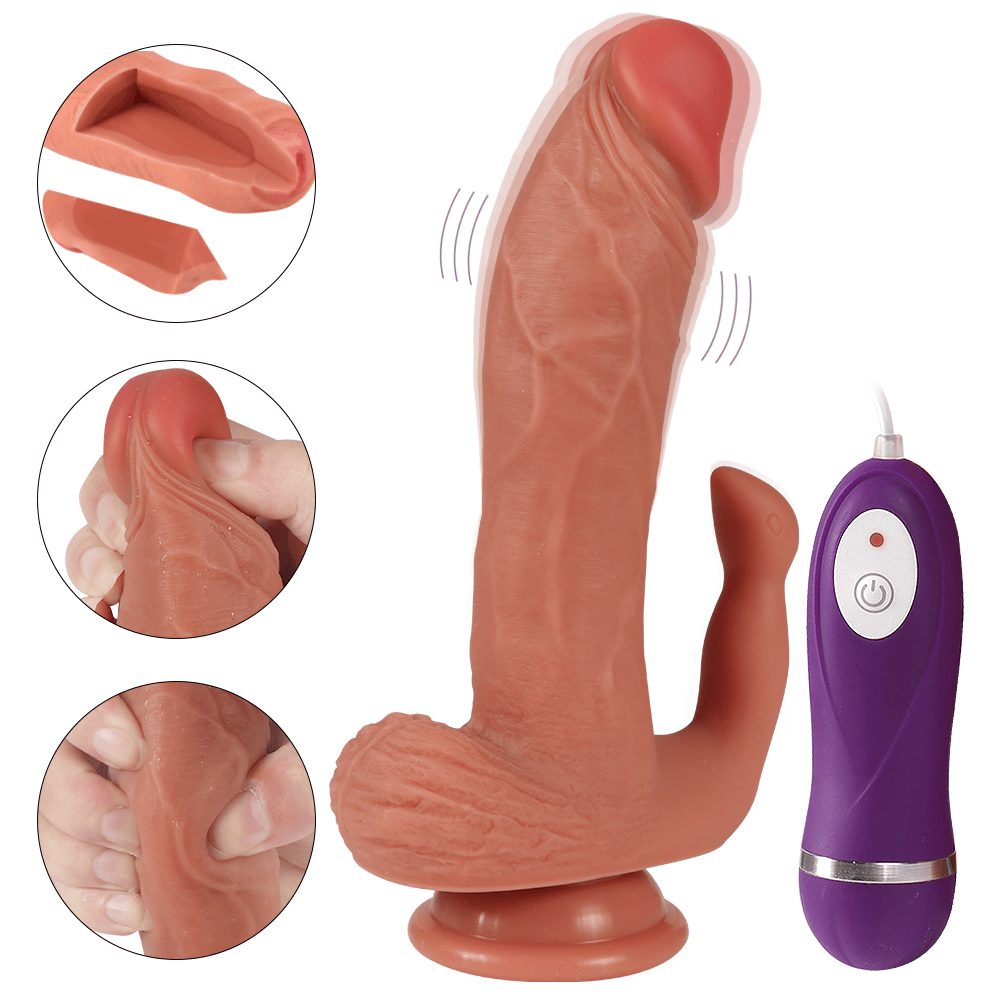
At WMCustomDolls, we view sizing as a measurement system rather than one number. This approach helps individual buyers compare products and gives retailers a consistent template for listings, filters, packaging, and private-label specifications.
Why Do Dildo Size Labels Create False Confidence?
Small, medium, and large sound convenient, but these labels have no useful meaning when sellers apply different measurements or category boundaries.
Size labels create false confidence because they rarely define total length, usable length, maximum width, curve, base, firmness, or weight. A reliable comparison requires numerical measurements, clearly marked measurement points, stated units, and current documentation for the exact SKU.
A seller might classify a product as “large” because of its total length. Another might use maximum diameter, while a third may consider weight or overall visual scale. Unless the classification method is published, buyers cannot compare those labels.
Even numerical listings can be misleading. Two products may both show a length of 20 cm and a diameter of 4 cm, yet differ in several ways:
- One measurement may include the base while the other excludes it.
- One diameter may describe the shaft midpoint while the other describes the widest point.
- One product may have a gradual taper and the other a sudden maximum width.
- One may be straight while the other has a pronounced curve.
- One may be flexible while the other is relatively firm.
- Their bases and total weights may be substantially different.
This is why advice such as “start small” or “choose your preferred length” is incomplete. “Small” still needs defined dimensions, and a preferred length is difficult to apply when the listing does not distinguish total and insertable length.
For retailers, inconsistent labels create wrong-size purchases, weak product filters, avoidable returns, and customer-service disputes. They can also produce duplicated SKUs when the same model is placed into several subjective size groups.
WMCustomDolls lists dildos as a defined toy category alongside other adult product categories. Within that category, however, each model still needs its own measurement record.
How Should Total Length and Insertable Length Be Separated?
A single dildo length can overstate the usable shaft when the measurement includes a suction cup, flange, handle, control section, or decorative base.
Total length should be measured from the product’s lowest point to its highest point in a defined resting position. Insertable length should begin where the usable shaft meets the base and end at the tip, following a documented method for straight or curved products.
For a straight model, total length can usually be recorded along the central axis. The listing should state whether the product was standing naturally, laid flat, or gently straightened. Flexible products should not be stretched during measurement unless the published specification explicitly describes a stretched dimension.
Insertable length begins above any part that acts as a stopping base, attachment flange, handle, or control housing. If the transition is unclear, the technical diagram should mark the exact start line. Without that line, another employee or supplier may measure the same SKU differently.
A practical specification should include:
| Field | Measurement method |
|---|---|
| Total length | Lowest product point to tip |
| Insertable length | Base-to-shaft transition to tip |
| Base height | Lowest point to defined shaft transition |
| Measurement position | Standing, resting flat, or another stated position |
| Unit | Millimeters or centimeters, plus verified conversion if needed |
| Tolerance | Supplier-stated range or verified sample variation, when available |
For a curved dildo size, retailers should avoid mixing straight-line height with length measured along the curve. Both can be useful, but they answer different questions. Straight-line height describes the product’s overall footprint. Centerline or contour length describes the shaft path under a stated method.
If supplier documentation does not define the measurement, request a marked diagram or verify a current sample. Do not estimate insertable length by subtracting a visually assumed base from total length.
Where Should Diameter and Circumference Be Measured?
Publishing one diameter without naming its location can hide a wide tip, narrow midpoint, flared lower shaft, or non-circular cross-section.
Dildo diameter should be recorded at meaningful, marked points, including the maximum shaft width and relevant tip, midpoint, or lower-shaft widths. Dildo girth should be measured around the same defined section or calculated only when the cross-section is approximately circular.
Useful measurement points may include:
- Widest part of the tip
- Narrowest transition below the tip
- Shaft midpoint
- Maximum shaft diameter
- Lower shaft immediately above the base
Not every design needs all five fields. A uniform cylindrical model may need fewer measurements, while a tapered or contoured model may require more. The objective is to describe the shape accurately, not to fill a fixed number of boxes.
Dildo girth means circumference: the distance around the product at a stated point. Diameter is a straight measurement across a circular section. For a true circle, circumference can be estimated with:
Circumference = Diameter × π
A 4 cm circular diameter would therefore correspond to a circumference of about 12.57 cm. The value should be rounded consistently and identified as calculated rather than directly measured.
That formula becomes less reliable when the shaft is oval, irregular, textured, or compressible. In those cases, use a flexible measuring tape around the defined point without pulling it tight enough to compress the surface. A second option is to record the maximum and minimum cross-sectional widths.
Retailers should never convert an unspecified “width” into circumference without confirming what was measured. The same rule applies to supplier spreadsheets: ask whether the figure is diameter, radius, width, or circumference before importing it into filters or comparison charts.
How Do Taper, Curve, and Firmness Change the Comparison?
Products with identical maximum diameters may still handle differently because that width can appear gradually, abruptly, briefly, or across most of the shaft.
Taper describes how diameter changes along the shaft, curve describes its directional shape, and firmness describes resistance to bending or compression. These characteristics should accompany the measurements because maximum diameter and length alone cannot represent the complete product geometry.
A tapered design may begin with a narrower tip and increase gradually toward the base. Another product may reach the same maximum diameter near the tip. If listings publish only the maximum figure, the two models appear equivalent even though their dimensional profiles differ.
Retailers can document taper with a simple diameter table:
| Measurement point | Example field |
|---|---|
| Tip | Tip diameter |
| 25% of insertable length | Upper-shaft diameter |
| 50% | Mid-shaft diameter |
| 75% | Lower-shaft diameter |
| Widest location | Maximum diameter and distance from tip |
These are template fields, not universal recommendations. The actual values must come from verified SKU documentation or sample measurement.
Curve also needs a defined method. A technical diagram can show straight-line height, centerline length, maximum offset from a central axis, and the direction of the curve. Avoid publishing an angle unless the start and end lines used to calculate it are shown.
Firmness is more difficult because “soft,” “medium,” and “firm” may be subjective. Material name alone does not establish flexibility. Shape, wall thickness, internal structure, and component design may also matter.
When no standardized firmness data is available, identify the description as supplier-stated and compare physical samples under the same conditions. Do not create a precise hardness number, universal fit promise, or performance claim without supporting documentation.
Why Do Base Diameter and Product Weight Matter?
Shaft dimensions receive most of the attention, but an omitted base or weight measurement can cause attachment, packaging, storage, display, and shipping problems.
Base diameter affects footprint, storage, packaging, and possible harness or mount compatibility. Product weight affects handling, shelf planning, packaging, and freight calculations. Both should be measured separately from the shaft and verified for the exact configuration.
The term base diameter works for a circular base, but many bases are oval, irregular, or flanged. In those cases, publish maximum base width, maximum base depth, and base thickness. A suction-cup design may also need its relaxed base diameter measured without flattening or stretching it.
A flat or flared base should not automatically be described as harness-compatible. Compatibility depends on the base, shaft dimensions near the base, harness ring, and complete attachment architecture. If compatibility has not been documented, publish the dimensions and tell buyers to compare them with their specific system.
Product weight should be defined as one of the following:
- Net product weight
- Product plus removable accessories
- Retail packed weight
- Shipping weight, including protective and outer packaging
Mixing these values creates inaccurate product pages and freight estimates. Use a calibrated scale where possible, record the unit, and identify which components were included.
For private-label teams, base dimensions and packed weight also influence insert trays, cartons, labels, shelf space, and case packing. A late correction can require package redesign or create a mismatch between the printed specification and the product.
WMCustomDolls supports privacy-focused packaging options and works with brands, wholesalers, and distributors on product and production coordination. Packaging and configuration details still need project-specific confirmation before approval.
What Should a Retail Dildo Size Chart Include?
A comparison chart is only useful when every product follows the same definitions, units, rounding rules, and measurement points.
A retail dildo size chart should include total and insertable length, diameter at defined points, measured or calculated girth, curve, taper, firmness description, base dimensions, and net product weight. It should also show the measurement method, units, source, and verification date.
A standardized chart can use the following fields:
| Specification | Required listing detail |
|---|---|
| Total length | Exact start and end points |
| Insertable length | Marked base transition to tip |
| Tip diameter | Location identified |
| Mid-shaft diameter | Midpoint method identified |
| Maximum diameter | Widest location marked |
| Girth | Location and measured/calculated status |
| Curve | Straight height, contour method, or documented angle |
| Taper | Diameter profile or concise description |
| Firmness | Defined source or comparative description |
| Base | Width, depth, thickness, and architecture |
| Product weight | Net weight and included components |
| Units | Metric and accurately converted imperial values |
| Evidence | Supplier file, diagram, or sample verification date |
Every product page should include a neutral measurement diagram. The diagram should use arrows tied to the same fields shown in the written specification. Product photos can support recognition, but they should not replace dimensions.
Retail teams should maintain one source record for each SKU. Marketplace listings, private-label packaging, comparison charts, filters, and customer-service documents should pull from that record. This reduces contradictory measurements across sales channels.
Our guide to adult toy product descriptions can help content teams organize specification fields. Buyers can also explore our wholesale dildo category, which sits within WMCustomDolls’ broader toy product range.
As a category grows to dozens or hundreds of SKUs, measurement standardization becomes increasingly important. Every active product should follow the same measurement template.
How Can Wholesale Buyers Check Size Consistency Before Bulk Approval?
Small specification errors can spread across cartons, packaging, retailer feeds, and private-label listings when buyers approve a bulk order from an incomplete spreadsheet.
Wholesale buyers should approve a master measurement template, request exact SKU diagrams, verify current samples, record tolerances where available, and reconcile product, packaging, and listing data before bulk production or release. Every revision should carry a date and version number.
Start with a controlled SKU sheet. Each row should identify the model, configuration, color where relevant, revision, and package version. Do not assume that products sharing a model name have identical dimensions if their bases, internal structures, or other components differ.
Next, request evidence for every measurement:
- Current technical or supplier diagram
- Neutral photo showing measurement points
- Sample-measurement record
- Scale record for net product weight
- Base and package measurements
- Unit and conversion method
- Stated manufacturing tolerance, if available
- Date and person or team responsible for verification
Check at least one current sample for each relevant configuration before approving private-label packaging. If samples differ from the supplier sheet, pause publication and ask which value is current. Do not average conflicting numbers without investigating the reason.
Wholesale buyers should also perform a data consistency review. The product page, carton marks, inserts, barcode record, retailer spreadsheet, and private-label packaging should use the same approved figures.
WMCustomDolls supports mixed wholesale orders, OEM and private-label projects, flexible product selection, and sourcing coordination for brands, distributors, and retailers. Our team can help coordinate product and packaging information, but measurements and tolerances should still be confirmed for each exact SKU before approval.
FAQ
Is Dildo Girth the Same as Diameter?
No. Girth is the circumference around a defined section, while diameter is the straight distance across a circular section. Retail listings should label them separately and identify exactly where each value was measured.
Does Total Length Always Include the Base?
It usually describes the entire product from its lowest point to its tip, which may include the base, but listing methods are not always consistent. Buyers should look for a diagram, and sellers should state whether suction cups, flanges, handles, or controls are included.
What Is the Best Way to Record Variation Between Samples?
Measure samples with the same tools, positions, and conditions, then record the individual results rather than silently replacing them with one rounded figure. Ask the supplier to confirm the applicable production tolerance and whether a difference reflects normal variation or a revised SKU.
Can Two Products With the Same Diameter Handle Differently?
Yes. The widest point may occur in different locations, and taper, curvature, firmness, weight, and shaft profile can differ. Maximum diameter should therefore be treated as one field within the full dimensional record, not as a complete size description.
Conclusion
Accurate sizing requires defined points, verified SKU data, and one consistent template. Accurate sizing depends on defined measurement points, verified SKU data, and one consistent specification template. Contact WMCustomDolls to request current product measurements, compare wholesale dildo SKUs, or discuss packaging and private-label specifications.
Planning a Wholesale Order?
Share your product interests, estimated quantity and destination market with our team.
Request Wholesale Information