


Blog
What Is a Dildo? Types, Materials, Bases, and Product Details Buyers Should Compare

Products carrying the same category name can differ greatly in size, firmness, construction, attachment, powered features, cleaning, and storage requirements.
On this page 9 sections
What is a dildo? It is a broad category of adult toy available in many shapes, materials, dimensions, and product architectures. Some are manual, while others vibrate, attach to a surface, or fit a compatible harness. Buyers should compare the exact SKU rather than rely on its category name or photo.
%Dildo types comparison showing materials, bases, power, dimensions, and product architecture
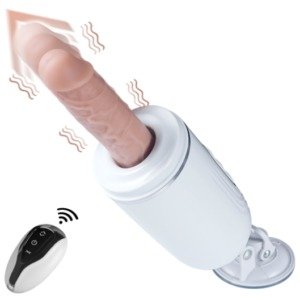
At WMCustomDolls, we treat “dildo” as a starting category, not a complete product specification. Our website also separates dildos, vibrators, suction toys, anal toys, and related products into distinct sections, showing why one broad label cannot explain every design.
Why Does the Word Dildo Cover So Many Different Products?
A simple definition helps buyers enter the category, but it does not provide enough information to select, compare, describe, or stock a specific model.
A dildo is a broad category of insertable adult toy defined mainly by its form. Many models are manual, while some incorporate vibration or other powered features. The category includes realistic, abstract, curved, vibrating, suction-cup, harness-compatible, glass, metal, and flexible designs, with several of these classifications often applying to one product.
The confusion comes from how products are named. One title may emphasize shape, another material, and another attachment method. These labels describe different specification layers rather than mutually exclusive types.
For example, one model could be described at the same time as:
- A realistic dildo because of its external shape
- A manual dildo because it has no motor
- A suction cup dildo because of its base
- A harness-compatible design because of its flange
- A silicone-surfaced product because of its exterior material
Another model could be non-phallic, vibrating, curved, rechargeable, and made with several materials. Calling either item simply “a dildo” does not reveal the information needed to compare them.
This is why generic lists of dildo types often fail. Lists may place “silicone,” “realistic,” “strap-on,” and “vibrating” beside one another as if they were alternatives. In practice, those terms answer separate questions:
- What does the product look like?
- What is it made from?
- Does it contain powered components?
- How is it held or attached?
- What dimensions and firmness does it have?
- How should it be cleaned and stored?
Buyers should begin with the complete architecture. Retailers should organize product data the same way so that overlapping features do not create duplicate categories or misleading filters.
Which Product Types Are Defined by Shape, Material, Base, or Power?
A product-type label becomes useful only when buyers understand which specification it describes and which important details remain unconfirmed.
Dildo classifications fall into four main layers: shape, material, base or attachment, and power. These layers overlap, so a single model may belong to several types. Buyers should use the labels as filters and then verify model-specific specifications.
Here is a practical category map:
| Classification layer | Common labels | What the label tells you | What it does not confirm |
|---|---|---|---|
| Shape | Realistic, non-phallic, curved, straight | General exterior form | Dimensions, firmness, or material |
| Material | Silicone, glass, metal, TPE, ABS | A stated material or component | Whether it describes the entire product |
| Base | Suction cup, flared, flat, harness-compatible | How the lower section is designed | Compatibility with every mount or harness |
| Power | Manual, vibrating, rechargeable, battery-powered | Whether powered features are present | Runtime, controls, charging, or water rating |
| Intended architecture | Handheld, wearable, mountable | General product arrangement | Universal suitability for a particular use |
A realistic dildo is defined mainly by its visual design. The name does not establish its material, dimensions, firmness, base, or powered functions.
A non-phallic dildo uses an abstract or ergonomic form rather than a realistic one. Product photography may communicate the broad shape, but it cannot provide reliable measurements or show how firm the item feels.
“Glass” and “metal” are material-based labels. Their rigid construction makes exact shape and edge finishing important, but buyers should still request the model documentation rather than assume every product using the same material behaves identically.
“Silicone” can be more complicated. A listing might describe the outer surface while the product also contains a motor, battery, internal frame, charging contacts, or an ABS control section. Our adult toy materials guide explains why component-level descriptions are more informative than a single material label.
What Measurements Matter More Than the Product Photo?
A photograph can show color and broad shape, but perspective, cropping, and missing scale can make two very different products appear similar.
A useful listing should provide total length, insertable length, maximum diameter or circumference, base dimensions, weight, and any relevant curve or attachment measurements. Buyers should confirm whether measurements are nominal, manually measured, or taken from current model documentation.
Total length and insertable length are not interchangeable. Total length may include a suction base, handle, control section, or decorative part that is not included in the usable shaft length.
Diameter and circumference are also different measurements. If a listing provides one but labels it as the other, buyers can receive a product that differs substantially from their expectations. Retail teams should state the measurement type and use one consistent unit system, ideally with accurate metric and imperial conversions where both are shown.
Depending on the architecture, a listing may need these fields:
| Measurement | Why it matters |
|---|---|
| Total length | Describes the complete product footprint |
| Insertable or usable length | Separates the working form from the base or controls |
| Maximum diameter | Identifies the widest specified point |
| Circumference | Provides another sizing reference when correctly labeled |
| Base width and depth | Helps assess storage, stability, and possible compatibility |
| Flange thickness | May affect harness or mount fit |
| Suction-base diameter | Helps buyers compare mounting architecture |
| Product weight | Affects handling, storage, freight, and display planning |
| Curve or angle | Helps distinguish straight and shaped designs |
| Package dimensions | Supports retail shelving and shipping calculations |
A photo also cannot communicate firmness reliably. Two similarly shaped products may have different flexibility because of material formulation, wall thickness, internal structure, or embedded components. Terms such as “soft,” “medium,” and “firm” are useful only when the supplier defines how they are being applied.
When firmness data is unavailable, buyers should request a current sample or supplier comparison rather than infer it from appearance. Retailers should avoid turning an unverified impression into a factual claim.
How Do Manual, Vibrating, Suction-Cup, and Harness-Compatible Designs Differ?
Treating manual, vibrating, suction-cup, and harness-compatible products as separate style names hides the functional differences that affect purchasing and product documentation.
A manual dildo has no powered function, while a vibrating dildo contains a motor or vibrating component. Suction-cup describes a base, and harness-compatible describes an attachment architecture. These features can overlap, but each requires different specifications and compatibility checks.
Manual Dildo
A manual dildo has no integrated powered function. That usually means there is no battery, charging system, motor control, runtime, or electrical care information to compare.
Manual does not mean simple in every other respect. Buyers still need to assess material scope, dimensions, firmness, weight, shape, base design, storage, and care instructions.
Vibrating Dildo
A vibrating dildo adds electrical or mechanical components. Its listing should identify the power source, controls, included charging equipment or batteries, and applicable operating instructions.
Buyers should request the current manual for the exact model. Do not infer runtime, charging time, water resistance, noise, motor strength, or travel-lock functions from a similar product. Those are SKU-specific claims that require documentation.
Suction Cup Dildo
A suction cup dildo is defined by its mounting base. However, the category label does not guarantee performance on every surface. Surface texture, cleanliness, base dimensions, material condition, and product weight may all affect attachment.
A product page should show the suction-base diameter and describe any supplier-stated surface guidance. Retailers should avoid universal claims such as “sticks anywhere” unless documented evidence supports them.
Harness-Compatible and Strap-On Designs
A strap-on dildo generally refers to a dildo used with a compatible harness system. Not every flat or flared base fits every harness, ring, or attachment.
Listings should provide the base shape, base width, shaft dimensions near the base, and any stated ring or harness compatibility. If the supplier has not documented compatibility, the retailer should say that the buyer must compare measurements with the specific harness.
WMCustomDolls maintains dildos, suction toys, vibrators, and accessories as recognizable product areas, which can support clearer wholesale selection and product filtering. Buyers can explore the Dildos wholesale category and request exact model information before placing an order.
Why Can the Same Material Require Different Care Instructions?
Material names can guide care decisions, but construction, surface finish, electronics, seams, coatings, and removable components may change the correct procedure.
Care instructions should come from the exact model documentation, not from material name alone. Two products described as silicone may require different cleaning, drying, storage, lubricant, charging, or immersion precautions because their complete construction differs.
A solid manual product and a powered product with a silicone exterior are not the same architecture. The powered model may have charging contacts, control buttons, seams, or a plastic housing. Unless the documentation states a water rating and cleaning method, buyers should not assume that the whole product can be immersed.
Component-level material scope also matters. “Silicone toy” might mean a silicone exterior over internal components rather than one solid piece of silicone. A rigid core, motor housing, battery, control panel, coating, or base could use another material.
For each exact SKU, request:
- Exterior or contact-surface material
- Internal or structural materials where relevant
- Base and control-section materials
- Cleaning instructions
- Drying instructions
- Storage conditions
- Compatible and incompatible cleaners
- Lubricant guidance
- Powered-component precautions
- Charging and battery guidance
- Water-resistance documentation, if claimed
Storage requirements can differ too. Some products should be kept apart to prevent material contact, dust transfer, surface damage, or deformation. Rigid glass and metal items have different impact and storage concerns from flexible products. Packaging that works for retail display may not be intended for long-term storage.
When evidence is missing, the accurate approach is to request the current manual or written supplier instructions. Retailers should not copy generic care advice across every SKU merely because the products share one material keyword.
What Information Should a Retailer Publish for Every Dildo SKU?
Weak listings produce wrong-category purchases and repeated questions because buyers cannot distinguish between visual style and functional product architecture.
Every dildo SKU should include exact dimensions, weight, shape, firmness description, component-level materials, base type, power system, package contents, compatibility limits, care instructions, and current model identification. Unsupported suitability or performance claims should be removed.
A practical content record should contain:
Product identity
- Brand and model name
- Unique SKU
- Model or revision number
- Current configuration
- Available colors
- Package version
Physical specifications
- Total and insertable length
- Diameter or circumference, clearly labeled
- Base dimensions
- Weight
- Curve or shape description
- Supplier-defined firmness information
Construction and function
- Component-level materials
- Manual or powered architecture
- Power and charging method
- Control arrangement
- Base or attachment type
- Documented harness or mount compatibility
- Water rating only when verified
Care and package details
- Cleaning and storage instructions
- Lubricant guidance from the model documentation
- Included charging cable, accessories, or storage item
- User manual availability
- Packaging dimensions where useful
- Warnings or restrictions supplied with the model
This structure also supports a cleaner retail taxonomy. “Realistic” belongs under shape, “silicone” under material, “suction cup” under base, and “vibrating” under power. One SKU can receive several controlled attributes without being duplicated as several unrelated products.
Our guide to adult toy product descriptions can help product-content teams build clearer listings. WMCustomDolls supports wholesalers, distributors, and retailers with sourcing, mixed product selection, OEM or private-label coordination, and packaging options that depend on the project.
How Should Buyers Move From a General Category to an Exact Product Decision?
Choosing from a generic “best dildo” list can lead to incompatible attachments, unclear care requirements, unsuitable dimensions, or expectations based mainly on appearance.
Start by identifying the required product architecture. Then verify dimensions and material scope, check the base or attachment, review powered features, confirm care and storage, and compare the documentation for the exact SKU before purchasing.
Use this six-step process:
- Identify the architecture. Decide whether the comparison concerns a manual, powered, handheld, suction-mounted, or harness-compatible product. Record overlapping features instead of forcing the item into one category.
- Verify dimensions and firmness. Compare numerical measurements, not visual impressions. Check total length, usable length, maximum width, base dimensions, weight, and available firmness information.
- Confirm material scope. Ask which components use each stated material. Do not assume that a silicone-looking product is solid silicone throughout.
- Check the base and attachment. Compare base dimensions with the intended surface, mount, or harness. A flat base does not automatically establish suction or harness compatibility.
- Review powered features. For vibrating models, verify the controls, power source, charging equipment, instructions, and documented water rating. Treat missing specifications as unknown rather than filling gaps with assumptions.
- Confirm care, storage, and package contents. Use the exact manual and current package list. This prevents incompatible care advice and missing-accessory disputes.
For wholesale selection, the same process should be applied to a dated SKU sheet or current samples. Our team can help compare product architecture, packaging, mixed-order options, and available OEM or private-label support. Current specifications and project options should always be confirmed for the exact model and order.
FAQ
Is a Dildo the Same as a Vibrator?
Not necessarily. “Dildo” describes a broad form category, while “vibrator” identifies a powered function. A vibrating dildo belongs to both categories, but a manual dildo has no integrated vibration.
Are All Dildos Compatible With Harnesses or Suction Mounts?
No. Harness and suction compatibility depend on the base architecture and model-specific dimensions. Buyers should compare the stated base, flange, ring, or mount measurements instead of assuming compatibility from a product photo.
Which Measurement Errors Cause the Most Listing Problems?
Common errors include confusing total length with usable length, treating circumference as diameter, omitting the widest point, and failing to measure the base. Retailers should also identify whether values are supplier specifications or approximate manual measurements.
Does a Silicone-Looking Surface Prove the Whole Product Is Silicone?
No. Appearance cannot confirm material composition. A product may have a silicone exterior plus an internal motor, frame, battery, control housing, or components made from other materials, so buyers should request a component-level description.
Conclusion
A dildo is a broad category, not one standardized product. Contact WMCustomDolls for wholesale selection, mixed orders, packaging, or OEM/private-label coordination.
Planning a Wholesale Order?
Share your product interests, estimated quantity and destination market with our team.
Request Wholesale Information